Sunday, February 17, 2013


This is the first part of a draft of my chapter on the silent cartoons of Max Fleischer.


In just a few short years, Max Fleischer went from being a hired hand at the Bray Studios to the head of not just his own studio, but of a releasing company, which expanded and then imploded under its own weight.

It must have been a heady ride for Max and his brother Dave. Breaking off from Bray in 1921, by August, 1926 Max’s Red Seal Pictures Corp. announced how it was releasing a series of live-action comedies as well as the Out of the Inkwell cartoons, the “Ko-Ko Song Car-tunes,” newsreels, the “Animated Hair Cartoons,” and many more shorts.

Red Seal had 22 exchanges throughout the country and did not rely on the states rights method of getting their films into theaters.
But, as fast as the rise was to the top, the ride down was equally quick. By November 1926, Max had lost control of Red Seal and was soon an employee in his own company.

How did the film industry, audiences and critics view animation in the 1920s? An interesting perspective is provided by “The Best Moving Pictures of 1922-23” edited by Robert E. Sherwood, a prominent critic of the time whose reviews appeared in “Life” and the New York Herald.
Sherwood introduced his chapter on the year’s short subjects by writing, “It is unfortunate that this book must necessarily be devoted to consideration of feature pictures (of five or more reels in length), with insufficient consideration of short subjects: comedies, scenics, animated cartoons, news reels and travel pictures. I do not hold with the notion that a one or two reel film is not better than ‘filler,’ and may dismissed as such. Many of the best pictures that have been compressed into brief form.

“I don’t want to ignore that short subjects and yet I am painfully aware of the fact that it is utterly impossible for an one writer to comment authoritatively on this tremendously wide field. There are so many hundreds of short subjects and their release schedules so uncertain, that I have been unable to cover them with any great degree of accuracy.

“However there have been certain producers whose one- and two reel products have stood out from the rest …”
Sherwood then details how Buster Keaton was the leader of the shorts performers and writes later in the essay, “Foremost among the animated cartoons have been Paul Terry’s ‘Aesop’s Fables’ and Pat Sullivan’s ‘Felix the Cat.’ The romantic adventures of Mutt and Jeff have been discontinued, but Max Fleischer’s ‘Out of the Inkwell’ goes on.”

It’s vital to assess cartoons from 1920 until the mid-1950s understanding several important points. Exhibitors competed with one another. In this era in which chain theaters are alike, it’s difficult to imagine that theater owners were considered showmen who cared deeply about what they presented in their theaters and how they presented it.

As they had done in vaudeville, owners of movie theaters assembled elements of features and shorts that they believed would attract and satisfy their audience. They did so by building programs. Many of these programs were assembled for both adults and children.
Cartoons were among those building blocks. Just like comic strips were a selling point for newspapers during that time, the right cartoon series could contribute to a theater’s success.

That’s why the trade papers of the day actually paid attention to short subjects and to animated cartoons.
Film Daily, for instance frequently noted how the larger New York theaters were programmed by announcing that a particular house had certain live acts or performances – many larger theaters had more than just an organist or pianist during the silent era, but a full band. These notices carried which specific feature was shown with which shorts. The goal was to give other theaters owners in smaller markets an idea of what was happening in the larger communities. Max’s cartoons were part of that mix in some of the best-known venues in the city.
Contributing mightily to the success of an animated cartoon series was how it was being distributed. Even if a producer made the best series from an artistic viewpoint, it did him little good if he couldn’t get his product into theaters.

There were two basic ways to distribute a motion picture. Several of the major studios owned theater chains that featured their own product. Many independent producers needed a middleman to get bookings. One of the most common approaches for them was to sell their films through the state rights system. Essentially, a producer would franchise his product to a booker who had a territory. That booker would seek theaters to show the films he represented.

Max used this system and, in a Film Daily trade ad on Aug. 6, 1922, announced he was “seeking territories through state rights distribution” for his “Out of the Inkwell” cartoons, “a marvel of comedy creations.”

In 1921, Warner Brothers had distributed the Fleischer product. It wasn’t long that Max attracted the attention of Margaret Winkler, an important player in the history of American animation. In an industry dominated by men, Winkler was a pioneer – the first woman to produce and distribute animated cartoons.

Besides distributing the Out of the Inkwell shorts, Winkler also distributed Pat Sullivan’s “Felix” shorts and Walt Disney’s “Alice in Cartoonland” films. Marrying producer Charles Mintz, Winkler eventually turned more of the business over to him, according to Donald Crafton in his landmark book “Before Mickey.”

In the Nov. 3 1922 edition of Film Daily, it was reported that Winkler, had “secured the second series of Max Fleischer’s 13 single reel ‘Out of the Inkwell’ comedies for distribution in the United States and Canada.” A few days after that the paper announced that Winkler had a distributor lined up for both the Ko-Ko and the Felix cartoons for the greater New York area.

The Out of the Inkwell shorts were being seen and reviewed well. Film Daily’s reviewer noted in its March 18, 1923 edition, “This one of Max Fleischer’s ‘Inkwell’ comedies shows the little imp from the inkwell annoying the artist who is trying to sleep. To punish the imp, he draws a high cliff and puts the little clown on its pinnacle so that he cannot get down. The clown goes to sleep and dreams – wild cartoon dreams of a giant and a cave and other things and the artist goes to sleep and dreams that the imp is chasing him all over the city in his pajamas. There are numerous laughs and the reel should have no difficulty in amusing your folks.”

Max’s interests during this early success were growing, though, beyond the animated short.

It may initially be difficult today to understand just how large a media star Albert Einstein was in the 1920s, but the nature of his fame certainly explained why an independent film producer would gamble on releasing a documentary that explained Einstein’s Theory of Relativity.

Considering that Dr. Stephen Hawking has made appearances on episodes of “Star Trek The Next Generation” and “The Big Bang Theory,” a film on Einstein’s best-known work shouldn’t seem too much a stretch to a contemporary audience.

Producer Edwin Miles Fadiman bought the rights to a German documentary on the subject, which he turned over to Max and Professor Garrett P. Service for re-editing and the addition of title cards. Service was a journalist turned scientist who had written many popular books on astronomical topics. Like Max, he also had a connection to Popular Science. Service had been lauded as a writer who could translate science to appeal to “the man on the street.”

The two men completed two versions: a two reel short and a four-reel feature titled “Einstein’s Theory of Relativity.”
On Dec. 8, 1922 Film Daily reported Max would complete his editing work that week for the feature. Max’s interest in the film grew as he was named an “officer and director” in Premiere Productions, which produced the film.

Some people have claimed that this was Max’s first animated feature film as it was released early in February 1923. The film is almost all live-action footage designed to illustrate the points of the theory, although Max did produce some limited animation.


The film – apparently the 40-minute version – actually received a three-week run at Rivoli Theater in New York City, according to Moving Picture World. Fadiman then released the film through his Premiere Productions and boasted in a trade ad that he had signed contracts for runs at Sid Grauman’s theaters in Los Angeles, McVicker’s Theater in Chicago and “booked solid over the Marcus Loew Circuit.”

The review by C.S. Sewell in Moving Picture World noted, “because of the large amount of newspaper publicity accorded this revolutionary theory considerable interest was aroused in the average person’s mind as to what it was all about.

“The film translated into non-scientific terms and with easily understood illustrations of the different points is a commendable effort to satisfy this curiosity.”

Essentially, the movie was an exploitation film, which took advantage of the stir in the press about the theory.

Sewell wrote the four-reel version is “a little more complicated and carries the explanation a little further, which is intended for school and colleges.”

As movie trade reviewers would do, Sewell also discussed the box office potential for the films. “So out of the ordinary is this film that is furnishes no definite basis of comparison with any other from a showman’s standpoint and it would appear to be a question for each individual exhibitor to decide as to whether it will appeal to his patrons.”

“Rush,” the reviewer from Variety, certainly had another view of the film. The critic wrote, “The picture occupying just 40 minutes and doesn’t hold for that stretch of time. What inspired them to book it into the Broadway film house is a mystery. A title quotes Einstein as saying that only 12 scientists in the world are capable of understanding the theory. That ought to be enough to keep it from boring a mixed lay assemblage if Valentino and Swanson fans and the army of women who do their popular science reading in May Manton and the Butterick publications.

“The film isn’t even illuminating in a popular way. It doesn’t explain anything that wasn’t already clear. It seems a waste of footage to create elaborate and intricate diagrams to demonstrate that if you step off the earth’s surface there is no such thing as east and west; that there is no meaning to the conception of large and small unless you establish some fixed standard of comparison and that fast and slow don’t mean a thing except in relation to something else. It’s just a labored exposition of the obvious. The picture toils through a morass of these elemental matters and then gets down to the obtuse substance of Einstein’s theories.

“The conception of bent space and bent light rays is illustrated by elaborate diagram, but they give no enlightenment. They use up an immense footage to demonstrate that if a man walks toward the stern of a moving boat at the boat’s exact speed forward, he is standing still in relation to the shore, but moving backward in relation to the boat itself. A title would have covered that. But when they come to deal with that bending of light they merely declare the principle and let it go at that.

“The diagrams are extremely ingenious to elucidate obvious things but when they get Einstein into the rarefied atmosphere of pure scientific reasoning they are baffling and the spectator is befogged. The thing is meaningless and gets down to the mere juggling of words. They establish the meaning of the yardstick of ‘time space’ and then describe the mysterious ‘fourth dimension.’ If the three known dimensions are up and down, right and left, and near and far, the fourth is ‘sooner or later.’

“The whole thing is about as clear and useful as this description of it, and it will probably bore the film fan stiff.”

I have seen several prints of the film at several different times but they have always been the two-reel version of the film. It’s possible the four-reel version has not survived.

I tend to agree with “Rush,” more than Sewell in a contemporary assessment of the film. It’s not the engaging film to watch and I’ve never seen it with a musical accompaniment, which certainly adds a certain burden to it. What does fascinate me about the film is its earnest effort to explain this theory for the masses. There is a certain democratization at work, but of course, with the real motive being to make money about a subject that is in the news.

Later in 1923, another documentary on which Max worked was released, “Adventures in the Far North.” Max apparently edited the film which was initially released as a five-reeler – about 50 minutes – but later trimmed to a four-reel version.

According to a Sept. 13, 1923 review in Variety, the film was “ a consistent digest of the travels of Captain [F.E.] and Mrs. Kleinschmidt through the inner passage to Alaska, which extended over a distance of 5,000 miles from Seattle and return … The trip was made on a former submarine chase which Capt. Kleinschmidt now calls the ‘Silver Screen,’ with him supervising the work of several camera men who made the picture. The trip began in May 1922 and lasted seven months … Scenes in Glacier Bay show the breaking up of a 40-foot sea wall and the huge waves caused by the collapse, the capture of a school of whales and the disposition of their carcasses at the whaling station … A thrilling is where Capt. Kleinschmidt, his wife and a cameraman are adrift on an ice floe and [are] forced to seek refuge on the top of a giant iceberg.”

Kleinschmidt was a veteran documentary filmmaker who had risen to some prominence in 1914 when his film “Arctic Hunt” was shown to members of Congress, according to Moving Picture World, “who were then legislating or trying to legislate upon Alaskan affairs. The captain’s information in motion pictures was greatly valued by the legislators, who freely declared that nothing less than a trip to a long residence in the territory could have supplied them with the facts recorded by the captain’s pictures.”

Max’s daughter Ruth recounted to me how a sequence involving Kleinschmidt capturing a polar bear cub, but relenting and returning it to the mother was a section of the film that Max had deliberately included.

Film Daily’s review of May 14, 1923 noted that sequence. “By far the most interesting of all, though, are the pictures of a huge white polar bear swimming with her young offspring hanging on. Remarkable are the shots showing the efforts to rope in the young bear and the frantic attempts of the mother to battle off the captors and her eventual content when the little bear is allowed to go free.”
The Film Daily review concluded, “The picture is worthy of exhibition anywhere and should be heartily received.”

Considering Max’s pride in his work in the Signal Corps in World War I producing instructional films, one might draw the conclusion that these films spoke to his love of science. Perhaps, as well, they added a greater legitimacy to his career than the animated adventures of Ko-Ko.

Max’s career as an editor of non-fiction footage took an interesting turn in October 1925 when Moving Picture World announced that he had signed a contract with Urban-Kineto Corp. to be “editor in chief” of two new films series for the company, “Reelviews” and “Searchlights.”
“Reelviews” appears to have been a newsreel series and the story reported that “Fleischer will have a staff of cameramen, reaching around the world, ready at a moment’s notice to go out and take the needed scenes” – undoubtedly a bit of press release hyperbole.

Charles Urban’s company produced non-fiction short subjects, one of which, “Nature’s Handiwork” secured a favorable mention in a New York Times movie column in February 1921.

According to an essay written by Luke McKernan, Urban was a film pioneer who had built a large library of stock footage. He was also a proponent of color film technology and had a vision for a film-based encyclopedia that would be sold to schools.

Although he did have two theatrical series of short subjects, Urban’s plans did not succeed and in August 1925, a former investor C.M. Bortman bought the assets of the company, which included 2 million feet of footage.

In the summer of 1925, Max’s feature film “Evolution” was released theatrically. Although a trade ad described it as “an Urban-Kineto production edited by Max Fleischer,” it was released by Red Seal, the new company headed at the time by Fadiman to distribute the Fleischer product.

The film is comprised of stock footage with some animation by Willis O’Brien from his 1918 film “The Ghost of Slumber Mountain.”

The trade ad from Red Seal was breathless: “ Everybody is talking ‘Evolution;’ Everybody wants to see ‘Evolution’ … A front page story in five absorbing reels.”

Whether or not the film was a sincere reflection of Max’s considerable interest in science is not known. What is definite is that the trade review in Moving Picture World was published on July 25, 1925 is the name recognition of the subject. The review was published just four days after John Scopes, a teacher in Tennessee had lost a court case due to his presenting the theory of evolution in his class, an action against state law.

The nation was obsessed with what became to be known as “the Monkey Trial” and “Evolution,” like “Einstein’s Theory of Relativity,” was in the purest definition an exploitation film.


It proved to be a well-received exploitation film. Moving Picture World reported, “The New York critics hailed the film enthusiastically. Harriette Underhill, in the Herald-Tribune, declared, ‘Don’t miss it whatever you do. We sat through it twice.’

“The Sun reviewer declares that ‘Evolution’ is ‘an absorbing picture tracing the ascent of man. Your beliefs, pro or con, do not prevent your enjoyment of an exhibition presenting in pictorial forms the beliefs and deductions of the best known scientists of the world. A wave of applause swept over the audience.’

“‘Absorbing, timely and well-done,’ says Rose Pelswick in the Journal. Quinn Martin in The World called it, “Unusually interesting and instructive as well’ is the verdict of the Post…

‘The Times put is official stamp of approval on it with ‘the audience applauded ‘Evolution,’ which proved interesting as a means of popularizing an abstract question.’ ‘Applauded for almost a minute,’ recorded the Telegraph.”

The film uses the stock footage to show the development of the earth, the links between various animals and fossil remains of dinosaurs and early man. It’s final title card walked the line that divided the nation on the issue; “Some call it evolution, others the work of God.”

During his work on these feature films, Max was producing the Out of the Inkwell cartoons and his involvement with Fadiman led to the creation of Red Seal, a company that would allow Max to distribute his own product. Film Daily reported on Oct. 26, 1923, “Red Seal Pictures Corp. has been formed with Edwin Miles Fadiman, president and general manager; Harold Rodner, vice-president and Max Fleischer, treasurer. ‘Unusual and distinctive pictures’ are promised by the organization which will release via the state right market.”
Later that year, Film Daily noted, “ Fleischer Closes Foreign Deals – ‘Out of the Inkwell’ cartoons have been sold by Max Fleischer for China, South Africa, Australia, Poland and England.”

The quality of the animated shorts didn’t seem to suffer during this time of business re-organization and expansion. The trade reviews were still positive for the Inkwell shorts.

In the Dec. 2, 1923 edition of Film Daily, “Shadows” was given the following review: “Once again the imp from the inkwell becomes involved, this time with the shadows of his own figure. The result is a completely different set of difficulties, chiefly the result of Fleischer's making silhouettes of animals with his figures. These animals annoy the imp and trouble him to such an extent that finally after being chased and crushed he becomes so bewildered that he is glad to jump back into the inkwell. Very laughable, very amusing.”

The first “Song Car-tune,” also reviewed a rave from the Film Daily reviewer on Feb. 24, 1924. “Here’s a new idea in song reels, presented by Charles K. Harris, the music publisher who is responsible for the songs and Max Fleischer whose animated cartoons skip nimbly from word to word of the song and lend much charm and some laughs. There is no picturization of the action described in the song – simply the words which run along the screen in large single-line type that moves slowly from right to left in time to the music and on which the tiny cartoon figures dance. The songs included are ‘Mother, Mother, Mother, Pin a Rose on Me,’ ‘Come Take a Trip in My Airship’ and ‘Goodbye. My Lady Love.’”

What would become known as the “Follow the Bouncing Ball” cartoons grew out of the convention in theaters of the time of sing-alongs with the theater’s musicians performing a well-known song and the lyrics would be projected on the screen on glass slides.

“A Trip to Mars” (April 13, 1924, Film Daily) received this reaction: “Max Fleischer continues to inject originality and novelty into his cartoon numbers. His latest, ‘A Trip to Mars,’ on the Rivoli program last week, is a clever and amusing number that shows the. Cartoonist at his best and with his pen clown performing a series of comedy tricks that will amuse and entertain any audience. The clown is sent, via a sky-rocket, to Mars where Fleischer installs all sorts of grotesque, imaginary beings. The artist appears in his film as usual and makes a flying trip to Mars himself through means of trick photography. This is an A-l cartoon number, a good novelty and quite amusing.”

The reviewer is right. “A Trip to Mars” is a fun cartoon tackling a science fiction subject not frequently seen in the movies of the 1920s.


Contemporary critics saw the Felix cartoons as the most popular animated cartoons of the era and interestingly Felix was often compared to Charles Chaplin – in fact Chapin appears in “Felix in Hollywood” in 1923. If Felix was Chaplin, then Ko-Ko was certainly the animated equivalent of Buster Keaton. Keaton’s comedies were known for their innovative sight gags and the Ko-Ko shorts pushed the boundaries of their format.

One could say that the typical Ko-Ko short was a contest of wills between the creator and the creation. If the shorts were formulaic in that sense, they were not formulaic in how they fulfilled that format. The Fleischer staff was willing to take chances by using different styles of animation and special effects. Other animation studios took notice.

Walter Lantz’s “Dinky Doodles” series at Bray was as close as an imitation of the Ko-Ko cartoons as one could find, even with Lantz himself as the human star.

Disney’s “Alice in Cartoonland” shorts reversed the Ko-Ko format. Instead of a carton character entering a human world, a human is in a cartoon world. Although in one early short, “Alice’s Spooky Adventure (1923), there is a reason given for this interaction – the little girl dreams it – in subsequent cartoons audiences just had to accept it. The other significant different is the Ko-Ko cartoons were technically superior to the Alice shorts.

© 2013 by Gordon Michael Dobbs

Monday, January 28, 2013


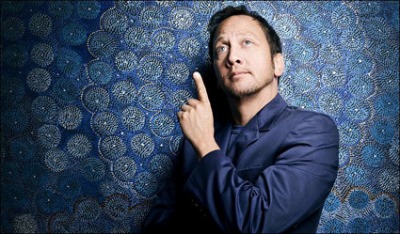
Rob Schneider was a gentleman and someone I could talk to for a long time as he really is a student of comedy.


Rob Schneider is more than a successful comedian. Speak to him for just a few minutes and you realize he is a true historian of comedy.

The former "Saturday Night Live" cast member, who has starred and co-starred in a string of popular movies will be performing at the Hu Ke Lau in Chicopee for two shows on Dec. 28.

Among Schneider's credits are films such as "Deuce Bigalow: Male Gigolo," "Deuce Bigalow: European Gigolo," "The Hot Chick," "The Animal," "You Don't Mess With The Zohan," "The Benchwarmers," "50 First Dates" and "The Longest Yard."

Schneider explained to Reminder Publications that he has been doing more stand-up comedy in the last few years in part because the late George Carlin inspired him. Schneider started out as a stand-up comic, but said, "I never got to the place where I thought my stand-up was great. I never conquered it."

When he saw Chris Rock perform, he decided to get back on the road.

"It feels good," he said, but readily admitted that traveling was tiring.

He said the difference is now — since there has been a 20-year gap in performing live — "I feel I can take the audience further and talk about things that interest me."

Schneider also enjoys the freedom of performing live on stage, a freedom that he didn't find during his recent television series, "Rob." A mid-season replacement series, "Rob" was based on one part of Schneider's life: his marriage to Mexican television producer Patricia Azarcoya Arce.

Although the show attracted 11 million viewers a week, it was cancelled.

Like all television shows, network execs tried to tweak the comedy.

"It's frustrating to get notes from people who don't know as much about comedy as you do," Schneider said.

He is philosophical about the cancellation, though.

"It's their money, it's their stage. You're just renting it," he said.

The show did give him the opportunity to work with one of his comedic heroes, Cheech Marin. Half of the legendary comedy team of Cheech and Chong, Schneider remembered the joy he had as a child listening to their comedy albums. Marin, he added, has "a lot of charisma and is very funny."

Marin, Schneider explained, like many successful comic performers has been typecast.

"Very few people can break [a typecast]," Schneider said. "You're stuck, but it's a good stuck. At least you're being cast."

Despite his less than pleasant experience with a television series, Schneider is looking at another potential show, this one based on a hit Australian series called "Mother and Son." The premise is about a man who cares for his aging mother who may or may not be suffering with dementia.

Some of the Schneider's film work has been in starring roles, while others have been co-starring. In "Judge Dredd," Schneider's character did a spot-on impersonation of Sylvester Stallone to the action star's face and Schneider recalled Stallone telling him, "You better be funny or you're dead."

His association and friendship with Adam Sandler has been without any death threats.

"Adam just gives me the opportunity of playing different ethnic guys," Schneider said.

Currently Schneider is working on an animated feature, "Norm of the North," playing a polar bear Norm. He is enjoying the work as he said it allows him to "really create."

Since he and his wife are recent parents, he is interested in finding work such as this assignment that keeps him closer to home.

Schneider believes that there is a renaissance of comedy going on today and has a theory that when the economy has its problems, the arts flourish. He noted that after WWII, Great Britain was having problems returning to its pre-war conditions.

"There was a feeling things were not going to get better for the English," he said.

In reaction to what was happening, came the very successful comedies starring Sir Alec Guinness from the Ealing Studio, Schneider noted. Post-war Great Britain gave birth to Monty Python, which Schneider said "was the high water mark for comedy in the 20th century."

Schneider sees performers such as Louis C.K. as part of that renaissance born out of our own problems.

He said that he would like to produce a television series on the history of comedy. Considering his busy personal and professional schedule, Schneider added, "Eventually."

© 2013 by Gordon Michael Dobbs

Sunday, January 20, 2013


Olive A. "Sue" Dobbs 1924 to 2013


My mom and me when I was probably two years old.

What my brother and I have gone through in the past several weeks is in the big picture nothing special. Every second of every day someone loses a parent.

It’s the hope of most people that they do not have to go through this event until they are in their middle age, but too many of us face such a loss when much younger.

My mom died in the morning of Jan. 9 at the age of 88. I’ve written about my father from time to time, but in our family there was no one more important in many ways than my mom.

She and my father, Gordon L. Dobbs, had a relationship, that least to me seemed pretty typical of the time during which they were young: my father had the career and my mom stayed home. It’s fair to say, though, what my dad wanted for his life could not have been possible without my mom.

My dad died in 1996 and while his death was a blow to me, there wasn’t the more profound sense of finality until my mom passed. Now, my brother and I are the oldest in our small family. Will our kids look to us as we looked to our parents? I doubt it. It’s a different time and place and we are all different people.

My mom came from pioneer stock and hers is a very American story. For instance, her great-maternal grandfather was a Dutch shipping heir who secretly left his vessel in San Francisco harbor when he learned of a plot against his life. He went into the gold fields of northern California and met a young Bavarian woman who had come to America with her sister. Her sister was married and the brother-in-law knew what a commodity he had in gold country: a single young woman. The Dutchman, as my grandmother Edith Gage would say, married this girl to keep her from living the life of a prostitute.

There is much more to this story and to others in my mom’s history. I know relatively little about my father’s family, although I now have a book on the Dobbs side that I will read.

My mom grew up in small towns and communities in the Sierra Nevada Mountains of northern California where the Feather River played a prominent role cutting a zigzag through the mountain canyons. Her father, Shirley Gage, came from a hardscrabble family in Texas and my mom used to say that he was born a century too late. He was an outdoorsman who spent much his life working hard jobs: lumber and mining. He loved to fish and hunt and there are many family photos showing him in the woods.

Although my mother said she never thought her family was poor as a child growing up in the Depression, she spent considerable time living with her mother’s family in Oroville, Ca., simply because her dad was having trouble earning enough money or finding a place for his small family – my mom was an only child – to live.


Mom in Oroville with a favorite doll.

Oroville was a big city compared to the hamlets here she lived. Her maternal grandfather, Emil Kessler, who was often described to me as “bantam rooster,” adored her. Emil was from Switzerland and had a well-known temper. He had nasty nicknames for many people, but for my mom he was a pushover.

When she was born, she was named for one of my grandmother’s brothers, Oliver. Her birth name was Olive Adell Gage. My great-grandfather, though, looked at her and declared, “She isn’t an Olive; she’s a Sue.”

From that moment on, the only people who called her “Olive” either didn’t know her well or was referring her in an official sense. She was “Sue” for the rest of her life.

Following graduation from Greenville (Ca.) High School in 1942, my mom attended a secretarial college in Chico, Ca., where she met my father who was training to be an Army Air Corp pilot. They were married in 1944. Days later, my father shipped out to Europe commanding a B-17.


My mother not long after her marriage.

My dad stayed in the Air Force for 26 years. He flew bombers over Korea as well and, after a serious injury, could no longer fly but switched to the maintenance side. He ended his career at Bien Hoa Air Base in Vietnam.

My mom sat out three wars, the last of which with two kids. That was not an easy thing to do. I never heard her complain. I never heard a regret.

If there were issues at that time, I never knew. My parents wrote frequently to one another but those letters were destroyed. I came across several as we cleaned out her home, but I didn’t look at them. It would have been an invasion of their privacy.

My mom also supported my father in his vocation as a furniture maker. My admiration for my father’s skills is immense. He could look at an antique, make a few measurements and notes and reproduce it. These skills, along with what he accomplished in the Air Force and as a high school teacher, have long put my own ambition into perspective.

He couldn’t have done it without my mom, though and he knew it. When my brother and I was moving a piece of furniture he built late in his life, there was an inscription on the back written by my dad in marker. It detailed how my mom saved his life and made things, such as the furniture, possible.


Here is my father in his crowded shop in the basement of our home at 104 Navajo Road in Springfield, Mass. in the early 1960s.

My parents were not perfect and neither was their relationship, but they gave my brother and me a great childhood. My dad never understood my interest in movies, but bought a wonder Super 8mm Bolex camera for me to make my own films.

My mother, although a movie fan as a kid, never appreciated my love of horror moves, but she gladly typed the printing masters for my fanzine Inertron.

Although my dad did have a plan for me – I was to be a schoolteacher – he only gave a small amount of resistance to me bring a writer. He never cared for my choice, although my mom said he was proud of me. I hope so.

My mom had much artistic talent, although she always downplayed it. She was a shy woman who made friendships for life. Although not a churchgoer, she read many books on religion and spirituality and was intrigued by true mysteries of the universe.

Mom was one of biggest animal lovers I ever know, aside from my dad who often declared he would rather be around animals than people.


We had a small farm in Granby, Mass., and my mom loved her herd of goats. My brother Patrick, a very talent photographer, took this photo.

They were both museum people and book people who held education very dear. In high school, I would be quizzed about how I did on a test and once I revealed the mark, if it didn’t meet Mom’s standards, she would reel off the names of my friends and asked what grade they received. She could be tough.

My mind is a jumble right now as memories come flooding back. Mourning is a surreal activity. One moment everything is fine, while the next is a mess. I know that I will think of her, as I’ve thought of my father, every week for the rest of my life.


Sunday, December 16, 2012

Time for some DVD reviews!


The Samaritan


Samuel L. Jackson has a strong work ethic and has appeared in many films playing a very similar badass. Sometimes he's a good guy, sometimes he's a bad guy, but frequently he is the same type of character.

That is the curse of being a movie star. Once you've established a successful persona that's what producers — and audiences — want from you.

That's why I enjoyed "The Samaritan," a new crime thriller that gives Jackson a chance to ditch all of those "Snakes on a Plane" roles for something more substantial.

Jackson is Foley, a man who has been released from prison after serving a sentence of 25 years. He's a consummate grifter who was caught by a victim midway through a con. The victim forced Foley to kill his best friend and partner in crime and then turned him over to the police.

Foley now wants simply to be left alone. He wants to find a job and go straight. A quick check shows most of his old friends and cronies are dead and the few left alive don't want anything to do with him.

The only person eager for his company is the son of his dead partner. Evan (played with slimy intensity by Luke Kirby) wants to recruit Foley into a big con. Foley refuses, but Evan has rigged Foley's life to draw the ex-convict into his scheme.

What complicates matters is that Foley has met a young woman, Iris (Ruth Negga), and has entered into a cautious, and at times reluctant, relationship.

This film is full of twists and turns, which I can't reveal, but I will say some of the plot points will leave your mouth hanging open in shock.

While there are moments of violence, this is not an action thriller, but rather is a character-driven drama. Jackson excels as Foley, a man who is actively trying to change his future. Foley is a thinker and Jackson's performance is filled with moments of quiet that convey much about the character.

Director David Weaver does well with the look and pacing of the film and co-wrote the script.

If you're up for a different kind of crime movie, seek out "The Samaritan."


Super


As I've mentioned before, the movies to review quickly add up and this film has been in that pile waiting patiently. I thought that considering the success of two huge summer blockbusters, "The Dark Knight Rises" and "The Avengers," it may be time to look at a more realistic approach to superheroes.

"Super" stars Rainn Wilson — best known for his role on "The Office" — as a short-order cook named Frank. Frank's life has been marked by two positive events. The first is when he helped a cop catch a criminal and the second is when he married his wife Sarah (Liv Tyler), a waitress at the restaurant who is battling addiction.

Life is good for Frank until his wife falls back into a bad crowd and leaves him to live with a local drug dealer played with twitchy charm by Kevin Bacon.

Filled with grief, Frank makes efforts to retrieve her, but Sarah doesn't want to be rescued. Frank doesn't know what to do until a group of tentacles saws open his skull to allow the finger of God to massage his brain. Well, at least that's what Frank believes has happened to him.

Frank may suffer from delusions, and he understands that about himself. His love, though, for Sarah is so strong that he is willing to accept what he thinks has happened.

The resulting inspiration triggers Frank's alter ego, The Crimson Bolt. In a homemade costume and with a huge wrench as his primary weapon, Frank decides to fight crime and get his wife back. What constitutes crime ranges from robbery to someone cutting into a line at the movies and both are met with concussions from Frank's wrench.

Frank's rallying cry is "Shut up crime!"

The violence is increased with the arrival of his young sidekick, a comic book store clerk played with a frightening intensity by Ellen Page.

This movie is part dark comedy, part social commentary and, at its conclusion, part legitimate hardcore action film. Director and writer James Gunn was responsible for one of the most outrageous and entertaining horror films of the past decade, "Slither" and he shows here that his quirky style certainly extends to another genre.

Gunn's basic premise is that to be a superhero one must be mentally ill or at the very least, emotionally distraught.

Wilson does well with the lead role, making Frank a sympathetic character, while Page is a hoot as the cute sociopath who complains to Frank he didn't tell her that she shouldn't kill people.

A very different kind of superhero film, "Super" was certainly more entertaining to me than "The Dark Knight Rises."


The Expendables 2


The first "Expendables" film was a master class in stunt casing. The idea of banding together action heroes — some of whom are fairly long in the tooth — for a film was an act of marketing genius.

Fortunately, the film as directed by Sylvester Stallone, the star of the movie, was enjoyable in a goofy way. It was difficult to take the film seriously and its largest charm was the sense the actors seemed to be having fun.

For the sequel, Stallone handed over the writing and directing chores to others and the result is a tighter, largely more credible film. The film stars Stallone, Jason Statham, Jet Li, Dolph Lundren, Randy Couture, Terry Crews and, in expanded cameos, Bruce Willis and Arnold Schwarzenegger.

Director Simon West kicks off the film with an outstanding sequence with the mercenary group storming what appeared to be some sort of outlaw Chinese stronghold to rescue a kidnap victim, played by Schwarzenegger. That leads to the main story in which the mercenaries are forced to take on what would appear to be a routine assignment of rounding up some stray plutonium. The job is complicated when a group of bad guys not only take the plutonium, but also kills one member of the group.

Jean-Claude Van Damme plays the chief heavy and he proves to have plenty of chops to protray a formidable villain.

For action fans, this film is a fun joy ride. Some of the territory will seem a little familiar, perhaps and the film's chemistry is weakened a bit by the departure of Li's character after the opening sequence.

West, who directed "Blackhawk Down," knows how to stage action and the film moves along at a faster pace than the first one.

The vintage of the some of the performers was more apparent in this outing. The addition of Chuck Norris, who at age 72, just seemed to capable of walking around a bit, didn't do very much for the film. Stallone's efforts to retain his youth have resulted in a slightly disconcerting look. Van Damme, on the other hand, seemed to have added a dimension with age.

Would I see a third installment of the series? If it has the energy and style of this one, absolutely.


Abraham Lincoln: Vampire Hunter


I mention this film in light of the new biographical film, "Lincoln," in the hope that people don't take it seriously. I know that history isn't the favorite subject for some people, so let me assure you there is no evidence that the real Lincoln wielded a vampire-killing axe.

Talk about a high concept: Abe Lincoln is recruited to kill vampires as a young man a practice that he brings to the White House and winds up playing a pivotal part in the Civil War.

Now, I thought such an outrageous concept would be handled with some element of dark humor, but director Timur Bekmambetov plays the subject matter very straight. In fact, the more earnest the film became, the sillier it seemed to me.

The movie was not helped by the wooden performance by Benjamin Walker, whose Lincoln was painfully awkward and often thick as a brick. Although there were better actors in the cast, such as Rufus Sewell and Dominic Cooper, Walker's portrayal was crucial for the success of the film.

The production also has an odd cheapness to it that is a killer for any period film.

This film isn't even worth the dollar rental from the Red Box.


ParaNorman


Not just do I love animation, I'm a sucker for stop motion animation — the technique used to create such diverse properties as the original "King Kong" and the "Gumby" shorts.

In this era of computer-generated animation, the rule of thumb was initially that stop-motion was dead, at best a nostalgic throwback. Nothing could be less true. Animation is an art form and different disciplines are available for artists to use to tell their stories.

"ParaNorman" is about a boy named Norman growing up in a New England town renown for its history involving the condemnation and execution of a witch. Norman isn't the most popular boy at school — and even at home his family hassles him — because he can see and speak to ghosts. Shunned by all, Norman's only friend, Neil, is also a social pariah.

Norman has a vision during his school play about the town's witch and her legend that leads him to his crazy uncle. Voiced with gusto by John Goodman, Uncle Prenderghast reveals a role that only Norman can play in saving his community from the supernatural events that are about to happen.

There are some great horror film comedy moments in this film as well as a surprising adult and moving plot point. "ParaNorman" may be well too intense for young children, but kids ages 8 and older, as well as their parents, should enjoy it.

The animation is wonderful as is the design of the characters. I was really impressed with this film and its success shows that stop motion animation continues to have a future.


Brake


Not to repeat myself — but I will — the biggest problem confronting the film industry today is lack of distribution and the unwillingness of theater owners to take any sort of chance on independent films.

"Brake" is a great example of an indie film that could have found a theatrical audience. It's a superior thriller that would have captured the attention of people who enjoy action and suspense films. When a theater owner has 16 screens in a multiplex, one would think a single screen could be devoted to such product.

Stephen Dorff plays Secret Service Agent Jeremy Reins who wakes up to find himself locked in a plexiglass box in the trunk of a car. At first he has no idea why he is there but soon he learns his captors are terrorists who want him to reveal the location of a bunker the president would be using in a domestic attack.

Reins won't cave, though and the terrorists use a variety of ways to try to break his will. I can't give away any more of the plot as the film takes audiences places one couldn't anticipate.

This film is a bravura performance by Dorff, an actor who has a long resume but has never really had the breakout role he needs. This really should have been it as the film is a showcase for his talents.

Director Gabe Torres shows he has some major creative chops by keeping the suspense high, despite the limitations of having one character on screen in one set.

"Brake" is a film well worth the search.


©2012 by Gordon Michael Dobbs

Monday, November 26, 2012


I’m pretty excited about something that has been recently posted on-line: a beautiful print of the Fleischer Superman cartoon “Terror on the Midway.” Warner Brothers Online has posted beautifully restored prints of the Superman shorts.

This short, part of the legendary series of adaptations produced in the early 1940s by the Fleischer Brothers, has long been available on various public domain labels. The rights to these cartoons reverted back to DC Comics and, believe it or not, the person in charge of renewing copyrights at DC at the time at the time of the cartoon’s expiration neglected to do so.

The results of this action have been both good and bad: the good aspect has been the cartoons have been readily available, but the bad is that all too often the quality has been sub-standard.

Gone were the days when it was truly difficult to see these cartoons. Although I saw them on TV as a child, the first time I saw a number of them to study was in DC Comic’s office, watching the company’s own 16mm prints.

Even when various VHS and DVD collection boasted of superior prints, there was never a good print of “Terror on the Midway.”

The Superman series was the first comic book adaptation to film. Although comic strips had been the subject of both short subjects and feature films, the Fleischer Superman shorts broke ground.

They also broke ground at the studio with a radical departure from the kind of animation for which the Fleischers were well known and tried to change the perception of what kind of stories were suitable for animation. Although very popular with audiences, imagine if other adventure strips had been transformed into animation maintaining their signature look – “Flash Gordon” or “Captain Easy” or Terry and the Pirates.”

These are cartoons that are staged as a live action film would be staged. They effectively used pans of static drawings in order to put the animation budget into the action scenes. Fleischer head Animator Myron Waldman told me that animating the Superman shorts wasn’t easy. He said that additional drawings were added to give the characters a greater sense of weight.

The Fleischers were smart enough to use the vocal cast of the popular Superman radio show – starring Bud Collyer – that provided an additional thrill to Superman fans.

Let me quickly add that Superman wasn’t a project the Fleischers wanted. It resulted from a deal made between Paramount Pictures DC Comics after an effort to secure a serial version of Superman at Republic Pictures failed. The Fleischers knew to do the shorts in the manner that they should they would be more expensive than most cartoons – making it more difficult to recoup their production expenses and deliver a profit. Paramount basically forced the studio to undertake the assignment.

Republic, by the way, then turned to Captain Marvel and produced the live action film based on a comic book superhero.

The look of “Terror on the Midway” was unique to the series. On paper, it seems sort of mundane. Lois is saddled with the boring assignment of reviewing the circus. By accident, a monkey releases a huge gorilla from its cage, which sets off some terrifying circumstances.

Here, watch it.


I loved the use of shadow, the almost film noir feel, that is used to add drama and horror to this story. This cartoon is “lit” in a way audiences hadn’t seen before. I also admire the use of sound in this film from the ambient noise of the circus in the beginning to how the cartoon falls silent when the gorilla makes his appearance in the big top.

This is the Superman, by the way, who couldn’t fly, but took tremendous leaps. While he was bulletproof, he could be stunned by electricity. The fact that he was more vulnerable than the god-like character we know today. While there are no mad scientists or monsters, the gorilla is presented in such a way to maximize its brute strength and the problem he poses for Superman. In several scenes the viewer doesn’t see the gorilla in his entirety – just his torso, which emphasizes his unnatural size.

During the fight between Superman and Gigantic, there are two close-ups of the combatants that are presented in a way I hadn’t seen before in the series.

I appreciate whoever in the vast corporate hierarchy of Warner Brothers who decided to out these cartoons online.

© 2012 by Gordon Michael Dobbs


Sunday, November 25, 2012


The door to the offices or barracks of my dad's squadron.


My dad's B-17, named after my mom.


My dad, Gordon L. Dobbs (with hat on right) in the pilot's seat. I don;t know the name of the crew member.

My mother and father were keepers. Perhaps it was their experiences as children of the Great Depression, but both of them hung onto things.

Make no mistake, neither were pathological hoarders. They simply saw value in keeping objects and documents that many other people would have thrown away.

My brother and I saw a lot of that recently as I helped him close down my mom’s house, now that her health as forced her to move in with him. There were the standard objects –furniture, books, kitchenware – and then there are those items that instantly transport me to either a time earlier in my life or to a point in our parents’ lives that I only heard about.

My parents liked taking photos and there are several suitcases of family photos. My brother Patrick is a skilled photographer and so these photos interest each of us on several levels.

My father was an Air Force veteran of 26 years who piloted B-17s in WWII, B-29s in the Korean Wars and after, B-52s with nuclear payloads, until 1961 when an accident grounded him. He stayed in the Air Force on the maintenance side, serving in Vietnam as his last assignment.

Three wars in one life. I can't imagine the impact other than my dad was changed in some ways upon returning from Vietnam.

As a rule, He talked very little about any combat experience. We heard very few stories as kids. As he grew older, he would call members of his various crews and speak with them. The experience they went through linked them in a way that someone who had not been there couldn’t understand.

For years, he would read the "Air Force Times" to follow the careers of guys he knew and with whom he served.

About WWII, he did say you could never tell who was coming back and the B-17 crews were witnesses to seeing fellow squadron members shot down before their eyes. Occasionally there would be a colorful detail, such as how he chewed tobacco when he flew to help stay awake. I never asked him how he spat wearing an oxygen mask.

So the discovery of photos my brother and I never have seen helps us gain a tiny shred of additional insight about our dad. My brother found a large roll of unprinted negatives, which we believe are from the WWII period. He plans to scan those to see what they are.

My dad was pretty tolerant of my interest in films, but he had no interest in any war film. He didn’t want Patrick or me to watch them as he said they glorified war.

With combat vets you never know what trigger will cause a cascade of memories – negative or positive. My dad liked the television series “M.A.S.H.” but when McLean Stevenson’s character was killed on his flight home and out of the service, my father stormed from the room. He said something the effect, “That’s not funny. That kind of thing really happened.”

The following photos include combat photography taken in the skies over Europe by an unknown cameraman. Pat and I have made the assumption the reason my dad had these prints was because the photographer was either in his plane – Sue’s Special, named after my mom – or flying somewhere within my father’s squadron.


Those puffs of smoke are flak from German guns. This photo shows a B-17 that has been hit.


Monday, October 15, 2012

In honor of Turner Classic Movies' programming of classic animation I decided to post the following information on "Gulliver's Travels." This material, in a finished form, with be in my book that – yes, I'm indeed writing – titled "Made of Pen and Ink: The Fleischer Studio Cartoons."


The making of “Gulliver’s Travels”

Although some people have erroneously written that Max Fleischer had produced the first animated feature, his movie on Einstein’s Theory of Relativity in 1924, that documentary was largely live action with some animated sequences.

Fleischer, who was seen as Walt Disney’s primary rival in the 1930s, had indeed experimented with longer form animation prior to Disney’s “Snow White” with great success. In 1936, the studio’s two-reel special Popeye cartoon for the Christmas season, “Popeye Meets Sinbad the Sailor” had gorgeous color, effective use of the Fleischer 3-D sets and a marvelous script. Exhibitors and audiences loved it, and the studio was preparing another two-reeler for Christmas of 1937. Disney, though, had an 83-minute feature, and Fleischer, his staff and the rest of the film industry wanted to see if audiences would accept a long cartoon.

“Snow White” was released nationally in February of 1938 and its overwhelming success prompted an announcement from Paramount Pictures. Paramount, Fleischer’s distributor, said that Max would be producing a feature for them. They would be fronting some of the production money for Max and also would help Max build a brand-new studio near Miami, Florida. Fleischer had settled a bitter strike in October, and had decided to move his operations from New York to Florida. The Fleischers had vacationed in Florida and the warm climates, generous local tax incentives and lack of union activity appealed to him.

So the studio’s plate was quite full. Max had to produce his studio’s first feature-length cartoon, move the operation from New York to Florida into a new studio he was helping to design and maintain the studio’s commitment of short subjects. Disney had worked on “Snow White” for five years. Paramount had given Max a release date of Christmas 1939.

During the same period, “Variety” reported that Universal and Walter Lantz would be making his feature debut with an adaptation of “Aladdin and his Wonderful Lamp.” This feature apparently never made its past pre-production.

In June, Max signed a contract with Paramount to produce “Gulliver’s Travels” (GT). Like Disney, the Fleischer brothers had chosen a “pre-sold” property that had a certain amount of name recognition, especially in Europe. How Jonathan Swift’s sometimes bleakly satiric novel would be adapted into a family feature was another problem.

According to a discussion guide prepared for high school teachers by the Educational and Recreations Guides in January 1940, there were several different scripts, several of which had Popeye playing Gulliver. According to this booklet, designed for teachers to use in the classroom, Dave Fleischer had wanted a light Gilbert and Sullivan-style operetta, while Max wanted something closer to Swift – “a truly sociological pictures, retaining the full weight of Swift’s satirical theme with modern implications.”

The final script was publicized as a compromise. The cartoon would have a surplus of music and would have the war between Lilliput and Blefuscu not over which end to open of a hard-boiled egg, but rather their national anthems. If Max’s intentions were to actually convey some of Swift’s satiric rage, this script was scarcely a compromise. There is little of Swift in the Fleischer’s “Gulliver’s Travels.”

Although there would have been reports that GT had at one time been discussed as a vehicle for Popeye, one could wonder if that would have resulted in an additional payment to King Features for the use of the character in a feature.

A story in “Good Housekeeping” described, the story session for the feature, which one should take with a grain of salt.

“A cartoon begins with a script and a script begins with story conferences. The first weeks in the new studios were dedicated to mass meetings in Fleischer’s office. Bill Turner, head of the script department, and 20 or more of his assistants thrashed out every angle of the story with Max.”

I don’t believe there were 20 people on the writing staff and it’s difficult for me to believe that Max, not Dave Fleischer, was that deeply involved in developing the script.

The same article quoted Edith Vernick as the “studio’s only female animator” lobbying for Gabby, the town crier and the comedic star of the film, to be more handsome. Vernick had been employed at the studio since the mid-1920s, but had only attempted animation once during the cartoon “The Fresh Vegetable Mystery” in 1939 and studio veteran Myron Waldman told me she was too slow in producing the necessary footage. Lillian Friedman was actually the first woman to be promoted to that position at the studio.

Publicity stories from that era in Hollywood can certainly be misleading.

Ever since the 1920s, Dave handled more and more of the creative side of the studio, while the business side was Max’s responsibility. That is not to say that Max wasn’t creative. Max’s daughter, the late Ruth Kneitel, showed me a script for a proposed cartoon featuring mermaids covered in notes Max made in red pencil. The date for the cartoon was unknown and by the test art that had been made for it, it could have been beautiful.

One aspect of the Fleischer Studio that colored the publicity for the feature was that Max was named more prominently than Dave, the film’s director. What the movie-going public didn’t realize was a growing sibling rivalry between the two men that eventually resulted in a split and helped along the demise of the studio in 1942.

The end of Dave’s marriage due to an affair with Mae Schwartz, a studio employee who became his second wife, didn’t help the relationship with Max, as Edith Vernick, a long-time Fleischer staff told me in 1977.

While there was drama between the two Fleischers, there was also drama among the staff caused by the deadline from Paramount.

By March of 1939, GT had been laid out, and the studio began hiring additional animators to help with the workload. A half-million drawings were required to produce GT, besides the work necessary to produce the studio’s short subjects. Waldman remembered the Fleischers were in a mad rush to hire people, some of who were not qualified as animators. This influx of talent, primarily from the California animation studios, created tension in the studio.

“Many of the people who came from the (west) coast thought they were better than us,” Waldman explained. The studio was still divided because of the strike, and the new additions to the staff didn’t help.

There were about 250 original Fleischer employees who made the trip to Miami. That staff grew to about 600 in order to make the production of the feature and the shorts possible.

Waldman also told me that a problem was some of the people hired in this rush had padded their résumés a bit and couldn’t really do what they claimed.

John Walworth was one of those new additions. Walworth was working at MGM when he was hired away to work on GT. He worked with studio vet Joe Oriolo, who felt insulted that he had to animate some of the many crowd scenes in GT.

“Joe sub-contracted some of these scenes to me to do under the table,” Walworth said with a laugh when interviewed in 1977. “So I did them along with my other work.”

The quality of the animation varies greatly. Some of it was seemed rushed, while other scenes are very good. Waldman attributed this uneven quality to the number of new animators plus the near-impossible schedule. Some of the new animators were amazed the studio didn’t do extensive pencil tests as did Disney and there was only one Movieola to view rushes.

There was only one pencil test performed and critics of the studio have seen the lack of pencil tests as an example of the Fleischer Studio “crudeness” as opposed to the polished quality of Disney animation. Certainly Max and Dave may not have thought pencil tests were necessary, but perhaps the schedule dictated by Paramount just didn’t allow it.

The film did not use the 3-D process Max had developed and was so effective in the shorts. Max did try a new invention during the making of the film. Like Disney would use a Xerox process years later, Max had come up with a system that would transfer the pencil drawings from the animators to the cels, skipping the inking step. Waldman told me that while it did work to a certain extent, it did not pick up fine lines and therefore was abandoned.

Waldman, one of the studios top head animators – who actually had more control over the actual direction than Dave Fleischer – sat out the first feature and worked primarily on short subjects. He did work on one sequence toward the conclusion of the film during which Gulliver wades into the ocean and gathered up the warring ships, dragging them to shore.

The recruitment of animators brought two former Fleischer animators back to the studio. Both Grim Natwick and Shamus Culhane had done considerable work at the Disney Studio, and now accepted Max’s offer to work on GT. Culhane was given crowd scenes to animate upon his arrival.

“Mob shots. I came in right at the end of the picture and they had a whole mess of them waiting for the very end of the job. I got things like the whole crowd is waving at Gulliver as he leaves. Jesus Christ! After being a specialist working on ‘Snow White’ I get stuck with this junk to do. But because of my background by that time I could do it very well, but it was a pain in the ass. I hadn’t done that kind of thing since a started at Walt’s,” Culhane told me in 1977.


<


These excerpts from early model sheets show the evolution of the characters. Although The King Little character looks close to his final design, the Gabby is more boyish and less grotesque.

Natwick recalled the casual atmosphere of the studio in an interview that year. He was given Dave Fleischer’s office to use while directing his 1,000 feet of GT. Natwick offered his assessment of the differences between Fleischer and Disney.

“Max did something so very different. They were two different people. Disney was a Yankee, coming from several generations of Americans. I believe Fleischer was probably the first generation...And they (the Fleischers) were American in every sense of the word. Disney had this in-bred thing that he didn’t have to think about doing something, but the Fleischers did. They accepted exactly as it was in the society in which they lived. And they grew up in the Jazz Age, and their cartoons are jazz cartoons.

“Disney had an aristocratic studio. Actually at Fleischer’s I never had a room of my own. There were one or two or three big rooms with one desk sitting behind another. But at Disney, we had private rooms, and they had a little buffet service. If you wanted a drink of pop or something or an apple to eat, you could phone the girl downstairs and it would be brought up, by errand boy,” Natwick said.

Natwick was considered a specialty animating women and Princess Glory was his assignment.


Three moments from the film.

Max Fleischer hired the song-writing team of Ralph Rainger and Leo Robin who had won the Best Song Oscar in 1938 for “Thanks for the Memory” to write the songs for the feature. According to the study guide, Rainger and Robin suggested the musical theme for the war.

Even resident tunesmith Sammy Timburg, whose usual chores were composing and scoring the studio’s shorts, got to write a song for the film – perhaps the movie’s biggest hit “It’s a Hap Hap Happy Day.”

Acclaimed composer Victor Young was hired to write the musical score. Young was nominated for 22 Academy Awards during his career, which was cut short by his early death at age 56 in 1956.


Some of the songs in GT were recorded by big bands of the day, including Glenn Miller.

The studio then did something that might have raised a few eyebrows in the film industry. Animation voice actors seldom got credit for their contributions to cartoons and were often fairly anonymous radio actors. The Fleischers signed up two of the nation’s most popular radio singing stars, Lanny Ross and Jessica Dragonette to perform the songs sung by the Prince and Princess in the movie. This was the first time any “name” personality had been recruited to do voice work in cartoons.

It was not unusual for the Fleischers to feature the music of popular artists in their cartoons. Performers including Cab Calloway, Ethel Merman, Arthur Tracy, Louis Armstrong, the Mills Brothers, Don Redmond and more had appeared in live action and animated sequences in Betty Boop and Screen Songs cartoons throughout the 1930s. The Fleischers extended this practice to their first feature.

In 1976, Ross recalled to me his experience working on GT. He had known Fleischer since they lived in the same building and had accepted the job like any other.

“I was told the Prince was very small, and I thought I should do something the make my voice sound small. So, I stood on my knees in the recording studio,” he said with a laugh. He really didn’t receive any direction on how to perform and his contact with the production was minimal. The publicity value, though, of having established performed involved with movie was considerable.

Pinto Colvig, who had done considerable work at the Disney Studio, including creating the voice of Goofy, was recruited to do the voice of Gabby the town crier who discovers Gulliver on the beach. Jack Mercer performed the voice of King Little of Lilliput while Miami radio personality Sam Parker of WIOD, a Miami, Fl. radio station, did the voice of Gulliver and performed the rotoscoped actions as well.

Although Ross and Dragonette received screen credit, none of the other vocal performers did.


This British postcard was one of the many merchandising tie-ins for the film, as was this Big Little Book.


While the movie was being animated, Max was working with Paramount’s Harry Royster on the merchandising of GT. Waldman explained that he had gone to Max once earlier in the decade and asked why the studio didn’t merchandise Betty Boop more.

“He said to me, ‘This is an animated cartoon studio, not a toy factory.’ He didn’t want to get into it then,” Waldman recalled.

Perhaps Fleischer had seen the enormous success of the Disney merchandising and had decided he too wanted to jump on that bandwagon. The Betty Boop material had been minimal and Fleischer had no merchandising rights to Popeye. With the move to Miami impending, Mae Questel – Betty Boop’s primary voice artist – decided to stay in New York, which helped to kill the Boop series. With Betty Boop gone, Fleischer pinned his merchandising hopes to GT. Paramount’s new licensing department arranged for 65 different GT products including dolls, coloring books, a Big Little book and pajamas among others.

With the splash the newly established television industry was making in cities such as New York, Fleischer and Paramount took the unusual step of offering for sale the television and radio rights to the picture. Clearly they were confident GT would be as much as a success as “Snow White.” In a full-page ad in the June 14, 1939 edition of “Variety,” Paramount trumpeted “The Biggest News of the Screen Year! A Full-Length Feature Cartoon Completely Filmed in Color!” With most movies in black and white and with only one other color feature-length cartoon existing, GT was indeed special at that time.

By August, both the new studio in Florida and the feature were reaching completion. The film’s budget had gone over the expected $900,000 mark and was to reach approximately $1.5 million. The Miami press welcomed the new studio as Florida had often attempted to become the “Hollywood of the East,” and the studio was the subject of a number of stories on Oct. 9, 1939.

In the Dec. 6, 1939 edition of “Variety,” Max announced this studio would produce another feature, as he was quite confident of the success of GT. A Spanish-language version was prepared for Latin and South American markets and 41 prints would be available for Christmas Day release with another 50 ready for New Year’s Day.

Paramount planned a massive advertising campaign designed to have a penetration of 60 million people. Full color ads were scheduled for “The Saturday Evening Post,” “Life” and “Good Housekeeping,” a first for productions from the Fleischer Studios.

The film had truly put a strain on the Fleischer staff. Not only did the staff have to move from its home in New York City to a new facility in Miami, but the contracted schedule of short subjects also had to be maintained.

Cartoons and features in the studio’s “Flipper” employee magazine in its December 1939 edition referenced the workload. Seymour Reit, the creator of Casper the Friendly Ghost, wrote the following poem for the “Flipper:”

“A Song of Impatience
“The feature’s finished,
The feature’s done
Work is over and worry’s begun
Come bite your nails,
Come tear your hair,
Come harry the gods in hysterical prayer.

“We mumble morosely,
All joy we despise
As we watch the growth of rings ‘neath our eyes
And we wait for the day that
The critic unravels
The wondrous merits of ‘Gulliver’s Travels.

“Hark! Winchell and Fidler
and Nugent and all!
When ‘Gulliver’ opens,
Heed promptly the call.
We know it’s a ‘wow
And we’re sure it will click,
But hurry, we beg you, and tell us that quick!”

The Miami premiere of GT was Dec. 18, 1939. Paramount officials, Florida politicians, members of the Miami social elite and entertainment figures met at the Sheridan and Colony theaters for the screening. A special police unit held back a crowd straining behind rope barricades hoping for a glimpse of the rich and famous, according to a contemporary newspaper account. Overhead, a balloon floated carrying a banner for the film.

One publicity feature was an appearance by Gulliver himself. No, not Sam Parker, but a nearly seven-foot tall unidentified man decked out in a Gulliver costume.

The next day, The Miami Herald reported on a congratulatory luncheon attended by Ross, Dragonette, Paramount executives and local officials. Max said, “Eighteen months ago when the decision was made to produce ‘Gulliver’s Travels’ as a feature, we faced some very real problem. For example, more than two years is required to produce an animated cartoon feature in color and sound, provided one has a large enough staff sufficiently experienced and coordinated to do the work.

“When we started this picture we lacked space, manpower and the machinery for feature work. We only had one and half years instead of two years in which to build, move, organize, equip and complete the picture by Christmas 1939.”

Although Max added some humorous remarks, his message was clear: GT had been an almost impossible task.

While the public made GT one of the top moneymaking films of the year, the critics were less than impressed. Frank Nugent of The New York Times dismissed the film as a “fairy tale for children,” calling “Snow White “a fairy tale for adults. Although entertaining, GT was not up to the Disney standard, he added.

“Variety” was more positive. “An excellent job of animation, audience interest and all-around showmanship,” it reported.

The film could have surpassed the box office it did if there hadn’t been a war in Europe.

According to a note in Variety, MGM brass mused that perhaps the live action “Wizard of Oz” should have been a cartoon.

The film was sold in the 1950s to a television distributor, which did re-release the movie to theaters, but along the way the film’s copyright was not renewed and it fell into the public domain.

With the advent of home video, dozens of different versions of “Gulliver’s Travels” have been in the marketplace, most often muddy and splicy second generation prints.

A simplified and sanitized version of Jonathan Swift’s classic, the film centers on Gulliver settling the differences between two kings who can not agree which national song should be played at the wedding of their children. The musical score is bright and bouncy in the tradition of 1930s musicals and there are some great moments of animation.

The difficulties with the film are the characterizations. The prince and princess who are to be married are simply vehicles for the performances of the national songs. The princess is remarkably bland, the prince has only one line of dialogue, which is marred by an inappropriate almost haphazard voice.

Gulliver, himself, is a very passive reactive character, only taking action in response to what is going on. He seems in a contact state of bemusement and used the phrase “My, my” way too much.

The nominal star of the show is the obnoxious town crier Gabby who fares much better here than in the series of shorts that followed the feature with him as lead. The three spies who are charged with killing the “giant” supply much of the humor.

Perhaps the scene which stops the film dead in its tracks is the one in which Gabby and Gulliver are walking together. Gabby is recounting a tall tale in rhyme with Gulliver responding with a refrain of “My, my.” The sequence does not to advance the plot or the characters.

The Fleischer staff established the design style of having the little people done as cartoons, while Gulliver is rotoscoped. It was an interesting decision as it separates Gulliver’s world– “the real world” – from that of Lilliput.

The look of the film is highly stylized and attempts to have the look and color range of Arthur Rackham's illustrations – an odd choice for bright and bold Technicolor.

While it’s not the studio’s best work – the 20-minute Popeye specials are more entertaining and their second feature “Mr. Bug Goes to Town” is better realized – it’s certainly is charming and has entertainment appeal today. There are scenes of wonderful animation and invention and I’ve always enjoyed the sequences in which Gulliver is captured as well as the one in which he is cleaned up by the townspeople. These scenes continue the Fleischer theme of mechanics that pops up in some many of the studio’s cartoons.

Another great sequence is the outdoor banquet illuminated by firelight with Gulliver’s hand “dancing” with the Lilliputians.

The Fleischers would get one more chance at a feature and would do far better.


This cartoon alludes to the impact of the feature on the Fleischer staff.

© Copyright 2012 by Gordon Michael Dobbs


Tuesday, September 25, 2012

Guilty, guilty pleasures

Yes, I can appreciate the great movies – most of them, at least – but I find that I'm drawn to films that live on the fringes of polite movie society.


"The Mad Doctor of Blood Island" is a thoroughly unhinged mad scientist movie shot in the Philippines with an American cast, but a decidedly different point of view. I will watch damn near any film shot in that nation in the 1960s and '70s. They look and feel different, even if an American director is on board.


"The Fiend of Dope Island" is the kind of film that makes me wonder, "Just why did they make this thing?" Bruce Bennett was an Olympic athlete who was slated to play Tarzan at MGm before an injury prevented him from doing so. He made a number of low budget films under his real name of Herman Brix in the 1930s, but changed his name and appeared in a string of big budget A films for major studios. By the late 1950s, he appeared in this pt boiler. He also co-produced. It has an evil hypnotic char,


Few films deserve more of revival than "Shakes the Clown." Starring, written and directed by Bobcat Goldthwait, "Shakes" gives all of us who grew up mistrustful of clowns plenty of ammunition. Very funny and in highly questionable taste, "Shakes" is one of my favorites.


There are few films from the 1970s that I love more than this movie created on a dare by Joe Dante and Allan Arkush when they were cutting trailers for Roger Corman's New World Pictures. Made in 10 days and utilizing a lot of existing footage from other Corman movies, it has a true charm and stars an actress who is largely forgotten today, Candice Rialson. She was a young woman who should have been a major star, but spent most of her career in low budget films. She could have done much, much more.

By the way the trailer is not safe for work.